Colorado is one of my favorite places in the world for fall photography. The San Juan Mountains in southwest Colorado are absolutely gorgeous that time of year, and packing for my fall photography workshop is a good opportunity to reconsider what actually needs to come along.
My approach is pretty simple: everything in the bag needs a specific job. I don’t enjoy carrying a ton of weight anymore, and I’m no longer interested in bringing equipment just because there’s a remote chance I might need it.
This setup gives me a main camera, three lenses covering 14mm through 400mm, a small walk-around camera, filters, a tripod, and the accessories that make travel and fieldwork easier. It’s streamlined, but it doesn’t leave me feeling limited.
Key Takeaways
- Three zoom lenses provide continuous coverage from 14mm to 400mm without an oversized lens lineup.
- A telephoto lens helps isolate tree structure and intimate details beyond the grand landscape.
- Compact filters and purpose-specific pouches keep the kit organized and straightforward to use.
- Pack equipment you expect to use rather than carrying extra weight for unlikely possibilities.
My Main Camera: Nikon Z8
The Nikon Z8 is still my main camera, and I absolutely love it. It has been a tank for me, although I’ve unintentionally put that description to the test.
Earlier this year, I dropped mine into a river in the Smoky Mountains. It was completely submerged, stopped working for four days, and then came back to life. It has worked flawlessly since. That’s my experience with this particular camera, not an experiment I have any interest in repeating.
The sensor does need a cleaning before I leave, so that’s on my pre-trip list. Otherwise, I’m very happy with it. There’s no reason for me to change a camera that’s doing exactly what I need.
Three Lenses That Cover 14mm to 400mm
I try to keep my lens lineup as limited as possible. For this trip, three zooms give me continuous coverage from 14mm to 400mm, with no gaps:
- Nikon 24-120mm: my everyday landscape lens and the one that spends the most time on the camera.
- Nikon 100-400mm: my telephoto option for isolating trees and more intimate details.
- Nikon 14-24mm f/2.8: my wide-angle option, with a particular role in aurora photography.
For the way I photograph landscapes, this is the best lens combination I’ve used.
Nikon 24-120mm: The Lens That Lives on My Camera
If I had to name my actual favorite lens, it would be the 24-120mm. I cannot say enough good things about it.
The focal range is a huge part of the appeal. A lot of midrange zooms cover 24-105mm, and an extra 15mm at the long end might not sound like much. In practice, that additional reach makes a meaningful difference to me.
It’s also relatively small and lightweight, which matters when I’m trying to keep the entire kit manageable. This is the lens that stays on my Z8 most often because it fits so much of what I like to photograph.
It isn’t cheap. I put it in roughly the $900 to $1,000 range when discussing this kit, compared with close to $3,000 for the 100-400mm. Prices change, but the point is that, in the grand scheme of lenses, the 24-120mm has been a brilliant option for me without being at the expensive end of my setup.
Nikon 100-400mm: Reach for Intimate Fall Landscapes
I used to own a 70-200mm, but I constantly found myself at 200mm wishing I could go a little farther. That told me something useful about my photography: I needed more reach, not another lens that stopped at the same place.
The 100-400mm suits my style much better.
For fall photography, I especially enjoy using it to isolate the structure of trees. Once the color moves a little past peak and some leaves have fallen, the branches and trunks become more visible. Those exposed shapes, what I think of as the bones of a tree, can make beautiful subjects.
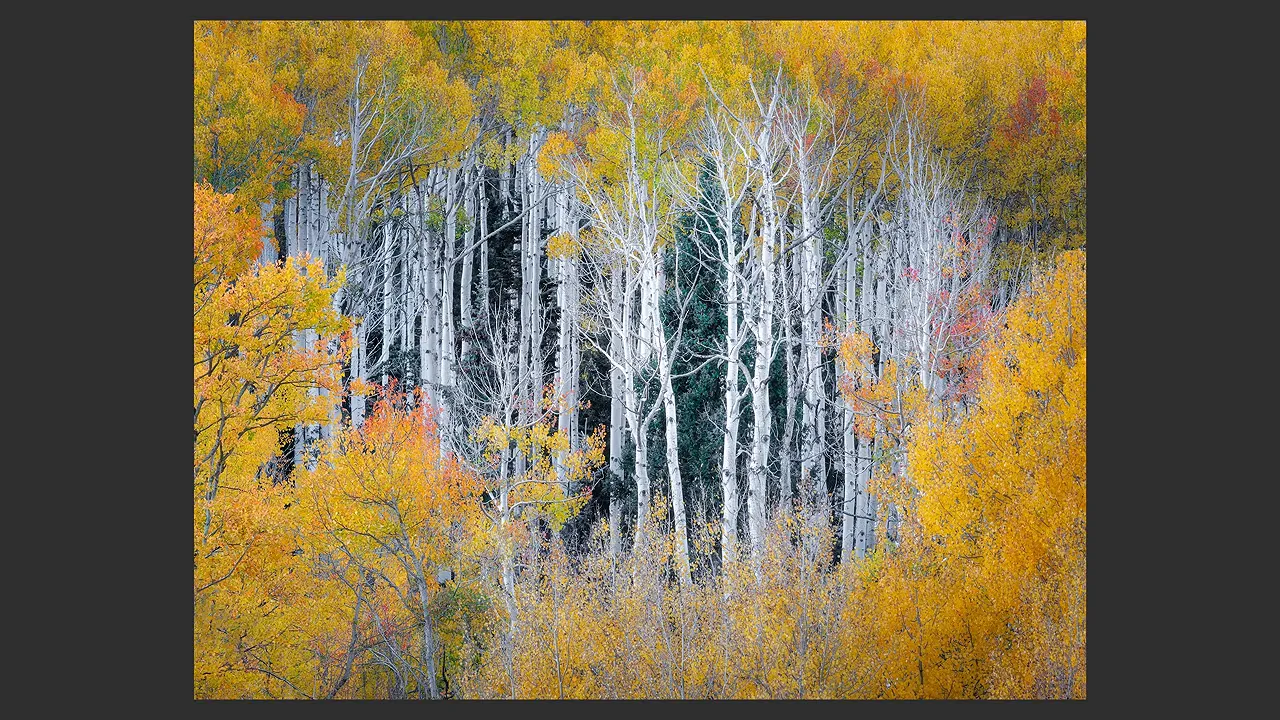
A longer lens lets me concentrate on those details rather than always making the big, grand landscape photograph. It gives me a way to create something quieter and more intimate within a much larger scene.
Nikon 14-24mm f/2.8: My Wide-Angle Option
The 14-24mm is probably my least-used lens, but that doesn’t mean I don’t like it. It’s a brilliant, very sharp lens. I simply don’t work at those focal lengths as frequently as I use the 24-120mm.
One situation where I consistently reach for it is photographing the northern lights. The combination of a very wide 14mm field of view and an f/2.8 aperture makes it my choice for aurora photography.
It also completes the wide end of this three-lens kit. I can go from an expansive composition to a tightly isolated detail without adding a fourth or fifth lens to the bag.
The Fujifilm X100VI Keeps Things Fun
The other camera coming to Colorado is my Fujifilm X100VI. This is my walk-around camera, and it’s just a lot of fun to use.
Sometimes I’m heading out to scout rather than to make a particular photograph. Maybe the conditions aren’t especially exciting, or I simply want to explore a location. The Fuji is easy to bring along for those outings.
That ease is its real job in my kit. It gives me something I enjoy carrying when I’m not interested in bringing the full landscape setup.
It was my only camera-gear purchase of the year at the time of packing this bag, and probably my favorite purchase from the previous couple of years. I don’t buy a lot of new gear. This one has earned its place because I genuinely enjoy using it.
A Compact Magnetic Filter System
I’ve used NiSi filters since the beginning, and over the years I’ve accumulated quite a collection: square filters, drop-in filters, slide-in filters, and more. My current NiSi JetMag Pro magnetic setup is the most condensed and easiest-to-use filter arrangement I’ve had.
I’m carrying one system configured for two different lens requirements, rather than two unrelated filter systems.
A Shared Setup for the 24-120mm and 100-400mm
The smaller filter kit serves both my 24-120mm and 100-400mm, which have 77mm filter threads. With the appropriate adapter rings, I can use the same filters on either lens.
This kit includes polarizers, solid neutral density filters, and variable ND options. Everything I need for those two lenses stays together in a compact stack.
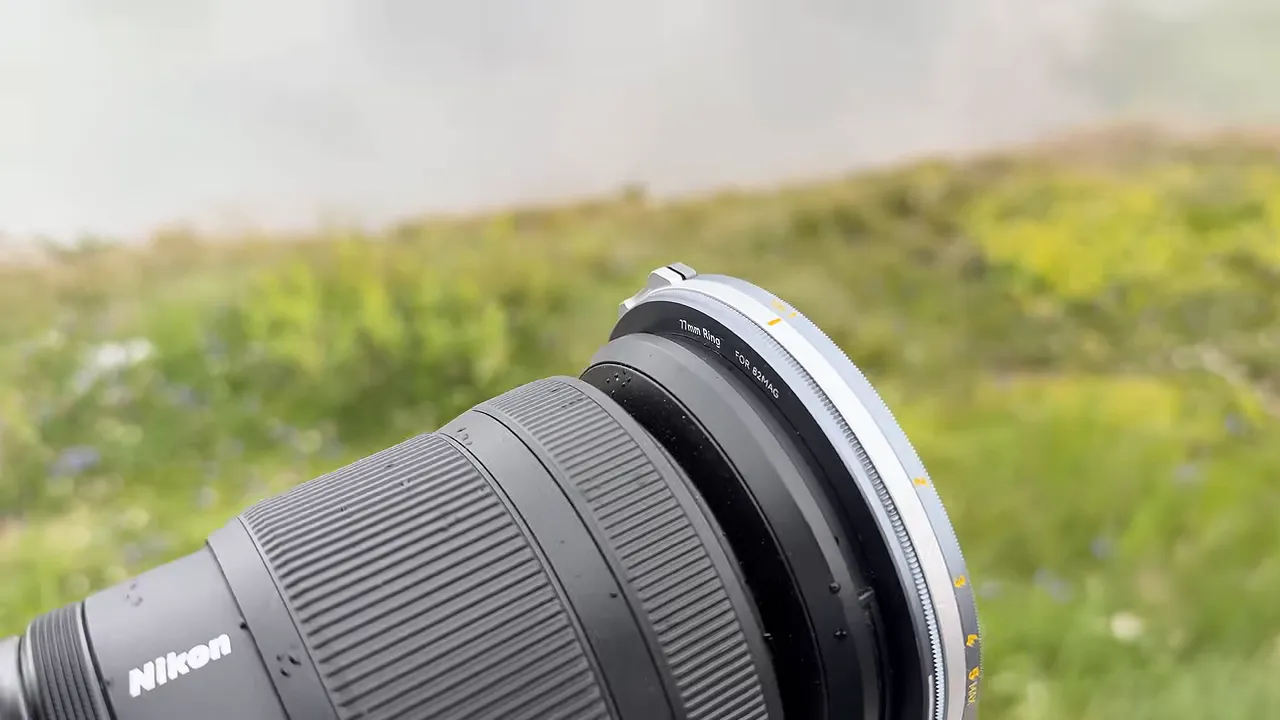
A Larger Setup for the 14-24mm
The wide-angle lens needs a larger filter setup and its own adapter. Once that adapter is on the lens, I remove the cap and attach whichever magnetic filter I need. I can stack filters as well.
For that lens, I carry a polarizer and ND filters that I believe are three-stop and six-stop strengths. I don’t use ND filters terribly often, and that selection covers what I need.
I used to remove the wide-angle adapter before packing because I like everything in my bag to be tidy. Eventually, I realized the lens fits perfectly well with it attached. Now I leave it on.
That small change removes an unnecessary setup step. The whole appeal of this filter system is that it’s compact and simple, so there’s not much sense in making it more complicated than it needs to be.
A Really Right Stuff Tripod and BH-40 Ball Head
I bought a Really Right Stuff tripod last year, although I hadn’t previously talked much about it. I don’t remember the exact leg model confidently enough to make that the important part of the recommendation.
What I like is how neatly it collapses. The legs fold together without leaving a big gap through the middle, so the packed shape is compact.
I’ve paired it with a Really Right Stuff BH-40 ball head that I’ve owned for about six years. That head has given me no issues at all.
For me, the combination is lightweight, condensed, and dependable. It works like a charm, which is exactly what I want from a tripod setup.
The Small Accessories That Earn Their Space
The cameras and lenses get most of the attention, but a useful camera bag also needs the less exciting things. I organize these by purpose so I know where to reach when I need something.
Cleaning Supplies in One Pouch
I keep Zeiss wipes, lens cleaner, and other lens-cleaning supplies together in a small pouch. Anything related to cleaning a lens has one home.
It’s a simple system, but it’s much nicer than searching through several pockets for a wipe.
Field and Travel Essentials
- Headlamp: an important item that always comes along.
- Reading glasses: increasingly necessary, whether I’m happy about that or not.
- Small deodorant: helpful after long flights, particularly for the people who have to pass me in the airport.
- Small medication pouch: for Tylenol and similar things I might need while traveling.
- Earplugs: for those hotels that turn out to be louder than expected.
- AirTag: tucked into the bag.
None of this is glamorous photography equipment. It still has a reason to be there.
Power, Charging, and Storage Stay Together
An orange f-stop pouch holds my charging equipment and related electronics. Computer chargers, iPhone chargers, Apple Watch charging gear, backup drives, and SD cards all go in the same place.
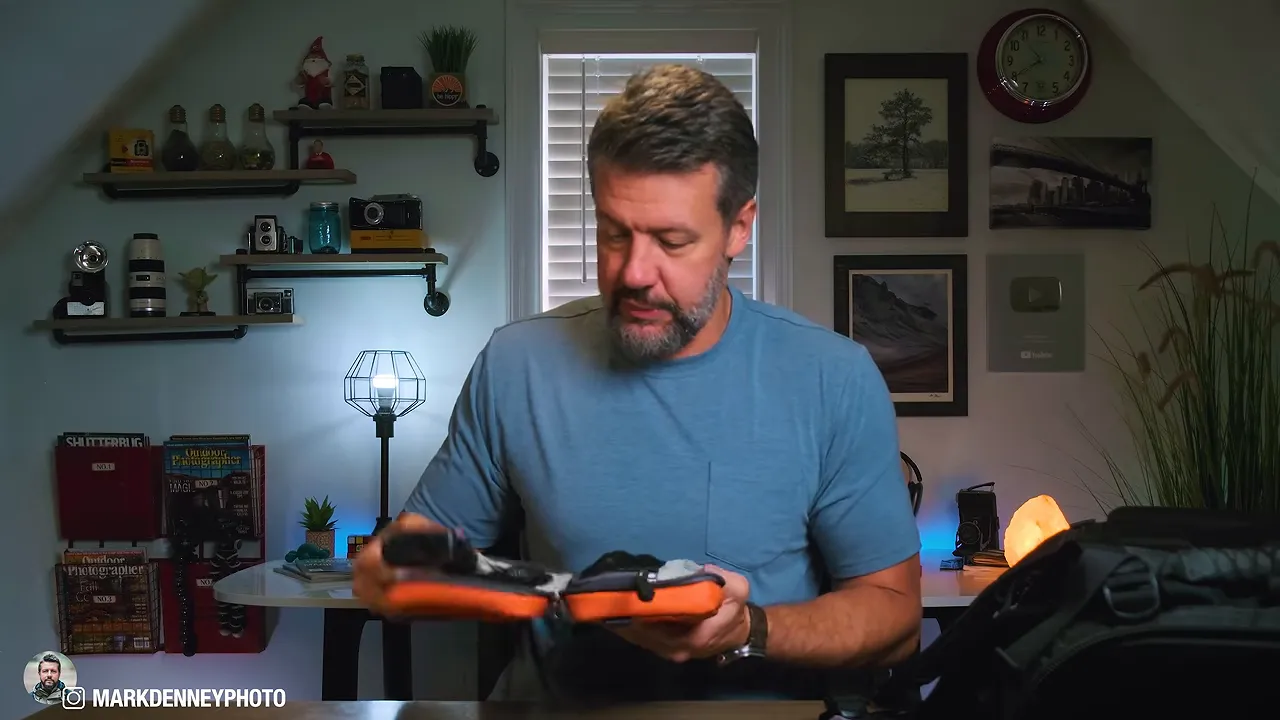
The pouch fits neatly above the camera compartment. That leaves room in the upper part of the bag for a jacket, hat, or other items I want to tuck in.
For the Z8, I carry two batteries total. In my own use, one usually gets me through a full day of photography, and the second is there as a spare. That’s based on how I use the camera, rather than a promise about how long a battery will last for everyone.
I also pack an Anker battery bank for travel. If my phone, AirPods, or another small device needs a charge while I’m in a pinch, I have an option that doesn’t depend on finding an outlet.
The Camera Bag: f-stop Lotus
I’ve been using this f-stop Lotus bag for almost three years, and it’s probably my favorite camera bag I’ve owned.
It’s the smallest bag I’ve used, but it holds everything I need. There’s a padded area for my laptop, space for the camera equipment and accessory pouches, and room left for a few extra items.
I could even fit my larger drone in it if I wanted to, although I hardly fly drones anymore. Available space doesn’t automatically mean I need to fill it.
At one point, I carried a 60-liter camera bag. For the way I travel and photograph now, that feels completely bananas. This smaller bag is comfortable, lightweight, and sufficient for the equipment I actually use.
That’s what makes it a favorite. Not the amount it could carry, but how well it carries the things I need.
My Packing Rule: Stop Bringing Gear for “What If”
I used to fall into the same trap before every trip: I hadn’t used something in a year, but what if this was the trip when I needed it?
That line of thinking adds weight quickly.
Now I make the decision differently. If I don’t expect to use something, I leave it at home. Every item in this Colorado kit has a specific purpose, whether that’s isolating a tree with the 100-400mm, scouting with the Fuji, cleaning a lens, or getting through a long travel day a little more comfortably.
The goal isn’t to carry the least gear possible. It’s to carry the gear I’ll actually use. For fall landscape photography, this setup gives me the range I want without taking me back to an oversized bag full of possibilities.


