I spent 12 months trying to find a Fuji X100VI. When I finally got my hands on one, I took it to the Faroe Islands to settle a question that had been bothering me for four years: would I keep it, or send it back like I did its predecessor?
This isn’t a traditional camera review. The X100VI is an excellent camera, but honestly, so are most modern cameras. What surprised me had very little to do with image quality, autofocus, or technical specifications.
It had much more to do with a change in my relationship with photography. A change that happened so gradually I hadn’t really noticed it.
Four Years Ago, I Asked the Wrong Question
About four years ago, I received a test copy of the Fuji X100V. I spent a few weeks using it and completely understood the appeal. It was small, beautifully designed, and genuinely enjoyable to carry around.
Then I did what seemed perfectly sensible: I sent it back.
I already owned a professional camera system that gave me everything I needed for landscape photography. I had the right lenses, the image quality I wanted, and a setup that worked extremely well. The X100V wasn’t going to replace any of it.
And if it wasn’t replacing something, where exactly did it belong?
At the time, that felt like a good enough reason not to keep it. But I started regretting the decision fairly soon afterward.
The strange part was what I missed. It wasn’t a particular feature, the sensor, or even the files. I missed the experience of using it. There was something about that style of camera that felt different from my usual setup, although I couldn’t explain why that difference mattered.
When the Fujifilm X100VI arrived, I saw another opportunity to figure it out. Finding one took the next year. And once I did, I was right back where I had started: I still loved my main camera system, and I still didn’t need another camera.
I needed to find out whether this camera had a real place in my photography or whether I simply liked the idea of owning it.
A Different Kind of Test in the Faroe Islands
Photographing around home or studying test images on my computer wasn’t going to answer that question. I wanted to take the X100VI somewhere photography would be a major part of every day.
So I brought it along to my Faroe Islands workshop, where we encountered some fairly extreme conditions.
My Nikon Z8 and my complete landscape setup came too. There was never any question about which system would be my primary tool. I expected to use the Fuji occasionally in the villages or during downtime, then compare the results when I got home.
That comparison never really happened.
The Nikon produced the majority of my strongest landscape photographs from the trip. When the light was good and I had a specific composition in mind, I still wanted the interchangeable lenses, the larger sensor, and the flexibility of my main system.
The X100VI didn’t take over that role. Instead, it began coming along in situations where I would have left the Nikon behind.
It wasn’t competing with my professional camera. It was filling the moments when I otherwise wouldn’t have carried a camera at all.
Three Situations That Changed My Mind
A Highland Cow I Almost Didn’t Photograph
One day, we took the workshop group to photograph Highland cows. They’re incredibly photogenic animals, and I always enjoy seeing them. But photographing cows usually isn’t enough to get me excited about carrying my entire landscape setup.
There’s the backpack, the question of which lenses to bring, possibly a tripod, and then the walk with all of it. When we arrived, my bag stayed in the vehicle. I wasn’t planning to take a camera.
But the X100VI was sitting right beside me.
Bringing it barely required a decision. There were no lenses to choose and no debate about whether the extra weight would be worthwhile. I put it over my shoulder and headed toward the field.
A few minutes later, I made one of my favorite photographs from the entire trip.
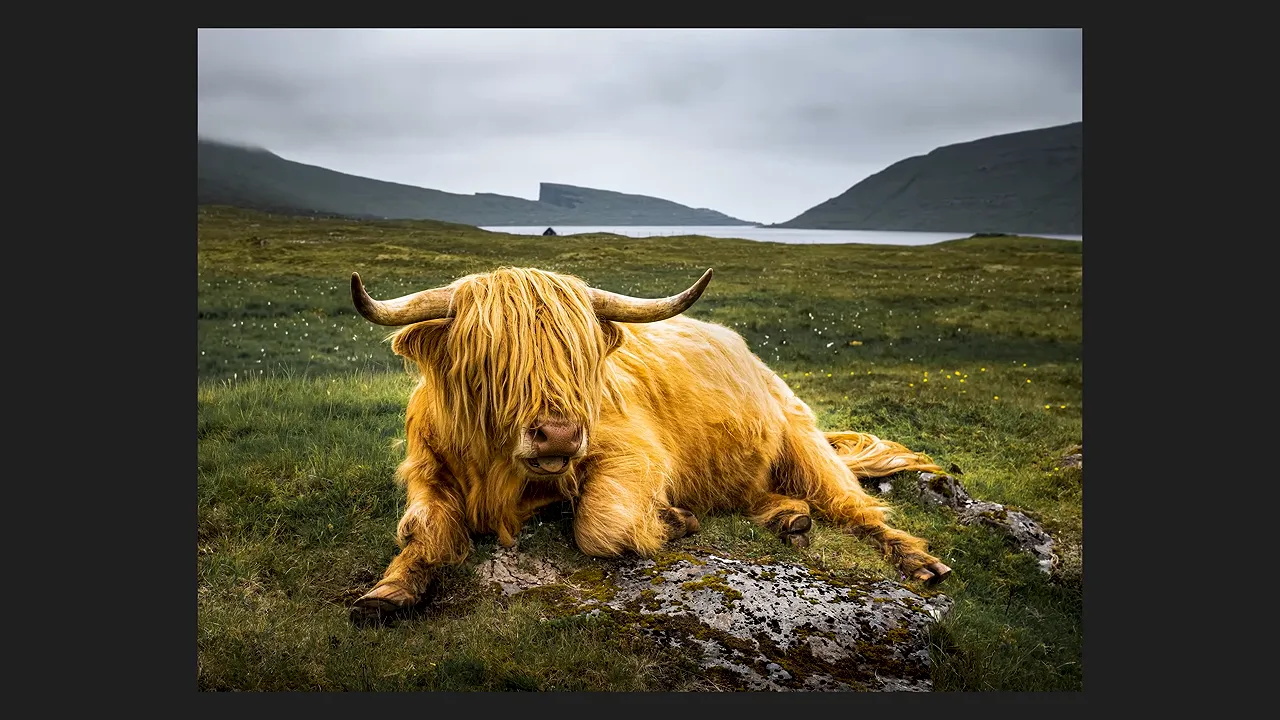
That surprised me, but not because the Fuji had done something my Nikon couldn’t do. The Nikon would have photographed that scene beautifully.
The important part was that I wouldn’t have brought it.
The meaningful comparison wasn’t X100VI versus Z8. It was X100VI versus no camera.
Wandering Through Villages Without an Assignment
The Faroe Islands are full of little villages that almost don’t look real. Colorful houses sit beside the water. Narrow roads wind between buildings. Grass grows across the rooftops.
They’re wonderful places to photograph, but on a landscape trip, they’re often somewhere we pass through between the bigger locations. If we’re stopping for only a few minutes, I normally don’t feel inclined to pull out the whole backpack and carry everything around.
This time, I could just pick up the Fuji and walk.
There was no expectation that I needed to come back with a portfolio image. Nothing had to contribute to a project. I could wander, notice something interesting, and make a photograph.
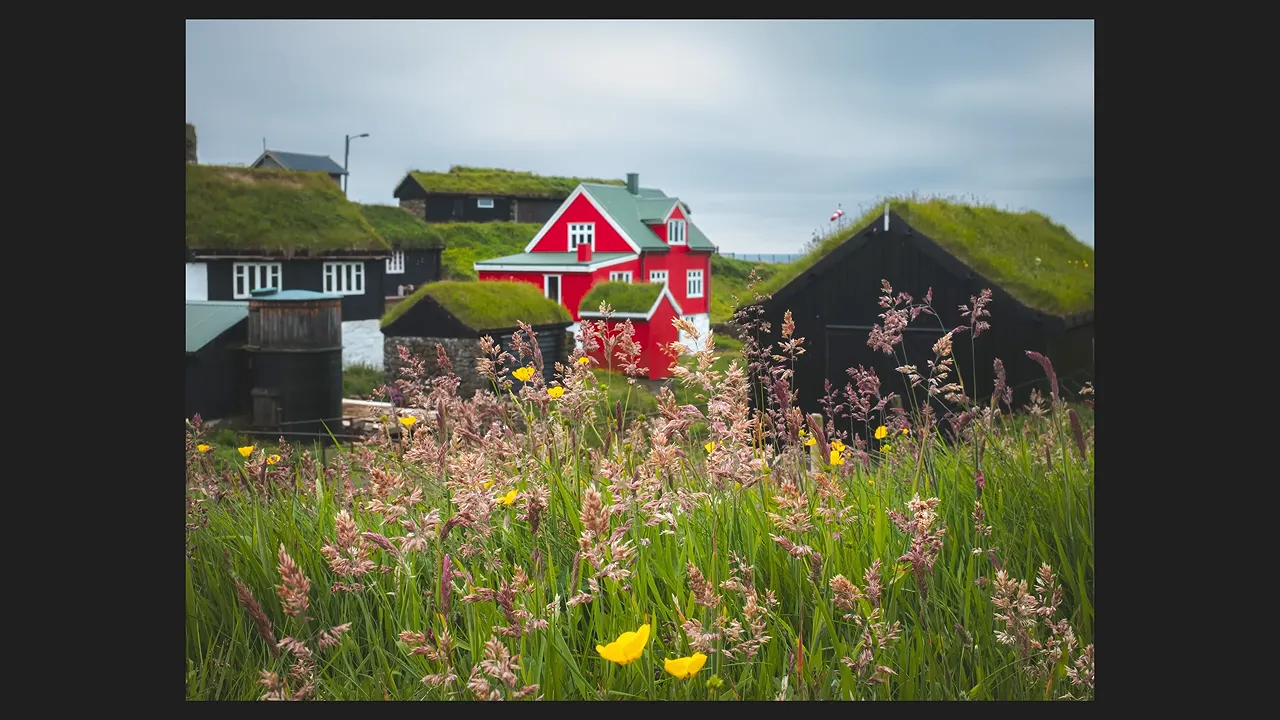
Once again, I came away with photographs that became favorites from the trip. And by then, I was starting to recognize a pattern.
It wasn’t simply that the camera was easier to carry. Using it also felt like a smaller commitment. A short walk could remain a short walk, with photographs along the way.
Taking a Camera When the Conditions Looked Ordinary
The third situation is something I’ve repeated more times than I care to admit.
I arrive somewhere, decide the conditions aren’t promising, and leave my equipment behind. Maybe I tell myself I’m only scouting. Maybe the sky is bright and mostly empty. Maybe I’ve already convinced myself that nothing worthwhile is likely to happen.
I know better. Landscape photography has reminded me plenty of times that conditions can change almost instantly.
Still, when bringing a camera means carrying a backpack, multiple lenses, accessories, and possibly a tripod, it’s easy to decide that a particular outing doesn’t justify the effort.
There were two occasions in the Faroe Islands when things looked fairly ordinary. Bright skies, very few clouds, and no obvious indication that anything special was coming. Normally, I would have explored without a camera.
Instead, I grabbed the X100VI. Carrying it was so easy that it barely felt like bringing camera equipment.
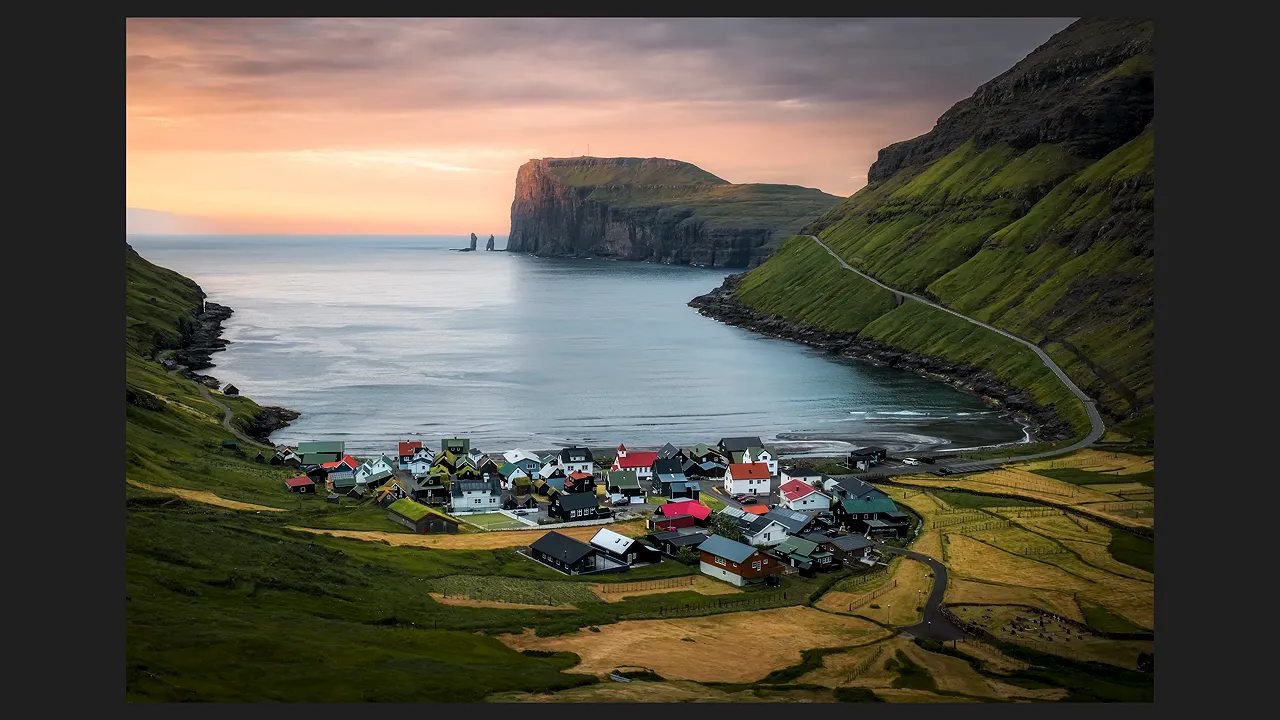
On both occasions, I made photographs I genuinely liked. Those images wouldn’t exist if I had followed my usual instinct and left my main system behind.
The Problem Was Friction, Not Image Quality
That was when I understood what this little camera was doing.
I’ve talked quite a bit about why I enjoy magnetic filters. It isn’t because a magnetic filter necessarily creates a better photograph than a traditional threaded filter. It’s because it removes the fiddly part of using one.
If a tool is cumbersome, we find reasons not to bother. We decide the photograph probably doesn’t need a filter. We don’t want to dig through the bag, line up the threads, and screw it onto the lens.
When it simply snaps into place, we use it more often.
The potential result hasn’t changed. The effort required to get there has.
The X100VI was doing something similar for my photography. My larger system asks me to make a series of small decisions every time I take it somewhere:
- Which lenses might I need?
- Should I bring the tripod?
- Do I want to carry the backpack?
- Are the conditions promising enough to justify all of it?
None of those questions is particularly difficult. Together, though, they create just enough resistance that sometimes I decide not to bring anything.
With the Fuji, most of that internal discussion disappeared. I picked it up and went.
It reduced the effort between noticing a possible photograph and actually making it. Because the camera was with me more often, I made more photographs.
But that wasn’t the most important change.
Not Every Photograph Needs a Job
Photography started as something I did because I loved it. There wasn’t much more to it than that.
As it became my career, another set of questions gradually attached itself to almost every image:
- Could this work in a YouTube video?
- Does it belong on my website?
- Would I share it on Instagram or Facebook?
- Could I use it as course material?
- Is it strong enough for my portfolio?
There’s nothing inherently wrong with those questions. I’m incredibly grateful that photography became my profession.
But somewhere along the way, I started spending more energy thinking about what a photograph might be used for than whether I simply wanted to make it.
The X100VI took some of that pressure away.
I could photograph a cow, a colorful house, or an ordinary moment while scouting without deciding what the image was supposed to become. It didn’t need a destination or an assignment. Wanting to make it was enough.
That felt familiar. It was the way photography felt when I first started.
I’d never really owned a camera that was just for fun. I had my professional system, and that was what I used. This little camera gave me a different way to enjoy something I already loved.
Why the X100VI Is Staying
By this point, I’d had the camera for almost three months and had nearly sent it back several times. I’m not someone who constantly buys cameras just to try something different. If I already have equipment that does my professional work well, another purchase takes some thought.
The Faroe Islands trip finally gave me the answer I hadn’t been able to find at home.
I’m keeping it. Not because it makes better photographs than the Nikon Z8, and not because it will replace anything in my landscape setup.
Four years ago, I judged the X100V by whether it belonged in my professional workflow. This time, I realized that wasn’t the role I wanted it to play.
The X100VI gives me an easy way to step away from that workflow.
My Nikon remains the camera I want for deliberate landscape work. The Fuji is the one I’m happy to bring when I’m not sure I’ll photograph anything, when I have only a few minutes, or when I just want to walk around and see what catches my attention.
The photographs it helped me make aren’t special because another camera was incapable of making them. They matter because, without it, I probably wouldn’t have made them at all.
That’s a very different reason to keep a camera. For me, it turned out to be the right one.
A Thank You to Squarespace
Squarespace sponsored this story, and it’s the platform I use for my website and e-commerce needs. Its Blueprint AI design system helps with building a site, while built-in SEO tools and online store features support showcasing photography and selling physical products, digital content, or services.
If you’re starting a website or upgrading an existing one, my Squarespace offer includes a free trial and 10% off your first purchase.


