If I compare the Fujifilm X100VI to my Nikon Z8, the Nikon wins in almost every category that normally matters to me. It has a larger sensor, interchangeable lenses, better ergonomics, and far more flexibility. If I’m heading out specifically to create the best landscape photograph I possibly can, I’m choosing the Z8 almost every time.
From a practical standpoint, that left me with very little reason to keep the X100VI. It didn’t replace anything. It didn’t fill a technical gap in my camera bag. My existing equipment could already handle the work I needed to do.
And yet, I kept wanting to pick it up.
That was the part I couldn’t quite explain. How could a camera I clearly didn’t need still feel valuable enough to keep? Taking it to the Faroe Islands began to answer that question. Editing the photographs when I got home answered the rest.
The Problem With Giving Every Camera a Job
Four years earlier, I had tested the Fujifilm X100V and approached the decision as logically as I could. I asked myself three questions:
- Could it replace my main camera?
- Would it improve my landscape photography?
- Would it allow me to create something I couldn’t already create?
The answer to all three was no. So I sent it back.
At the time, that seemed perfectly reasonable. I had enjoyed using it, but enjoying a camera didn’t feel like enough of a reason to own it when I already had a more capable system.
The problem was that I kept thinking about it after it was gone. I wasn’t missing a particular feature. I wasn’t missing photographs because I no longer owned it. The Nikon was still better suited to almost everything I normally photographed.
What I missed was simply wanting to carry it.
When I got the X100VI, I immediately started asking the same questions. What would it replace? When would I choose it over the Nikon? Where did it fit into my normal workflow? Once again, every logical answer pointed toward sending it back.
Looking back, I think the questions themselves were the problem.
Once photography became my career, I became accustomed to judging equipment by the job it performed. A new camera or lens needed to improve the finished image, solve a problem, or make my work easier. That makes sense when photography is your business.
Without realizing it, though, I had started applying that standard to every photograph I made. I kept trying to assign the X100VI a job because I thought that was the only way to justify owning it.
Maybe it could be my smaller landscape camera, except the Nikon was better for that. Maybe it could be my travel camera, except there would still be trips when I wanted several lenses. I could argue against every role I tried to give it.
Meanwhile, the camera that made the least sense in my workflow was the one I kept reaching for when I wasn’t thinking about work.
A Walkabout Camera Asks Less of You
My Nikon has a very clear purpose. When I pick it up, I’m usually going out to create something specific. The photograph might be intended for my portfolio, a course, a workshop, or another project.
Before I leave, I’m thinking about the location, the conditions, which lenses to bring, and whether I need a tripod. Those decisions are part of making an intentional landscape photograph, and I enjoy that process.
The X100VI didn’t come with those same expectations.
I could carry it without officially going out to do photography. I didn’t need a destination, great conditions, or a plan for the finished image. Something catching my attention could be reason enough to photograph it.
I originally thought that lack of a clear purpose was the strongest argument against keeping it. Eventually, I realized it might be the entire reason I wanted it.
After I shared my earlier thoughts about the X100 series, other photographers described similar experiences with Ricohs, Leicas, older Fujifilm cameras, and equipment they had owned for years. One person called theirs a walkabout photography camera, which described it perfectly.
They weren’t all talking about the same camera. They were talking about the same feeling. It wasn’t necessarily the most capable camera they owned. It was the camera that asked the least of them.
My Nikon gives me more options. The X100VI gives me fewer decisions. One helps me control the result. The other makes it easier to stop worrying about the result.
That explained why I wanted to carry it. But I still needed to be excited about the photographs it produced.
The Highland Cow Photograph That Surprised Me
One of my favorite photographs from the Faroe Islands was an image I had no expectation of making.
I wasn’t even planning to bring a camera to that location. At the last second, the X100VI was sitting beside me, so I slung it over my shoulder and took it along. That small decision led to a photograph of a Highland cow that became one of my favorites from the trip.
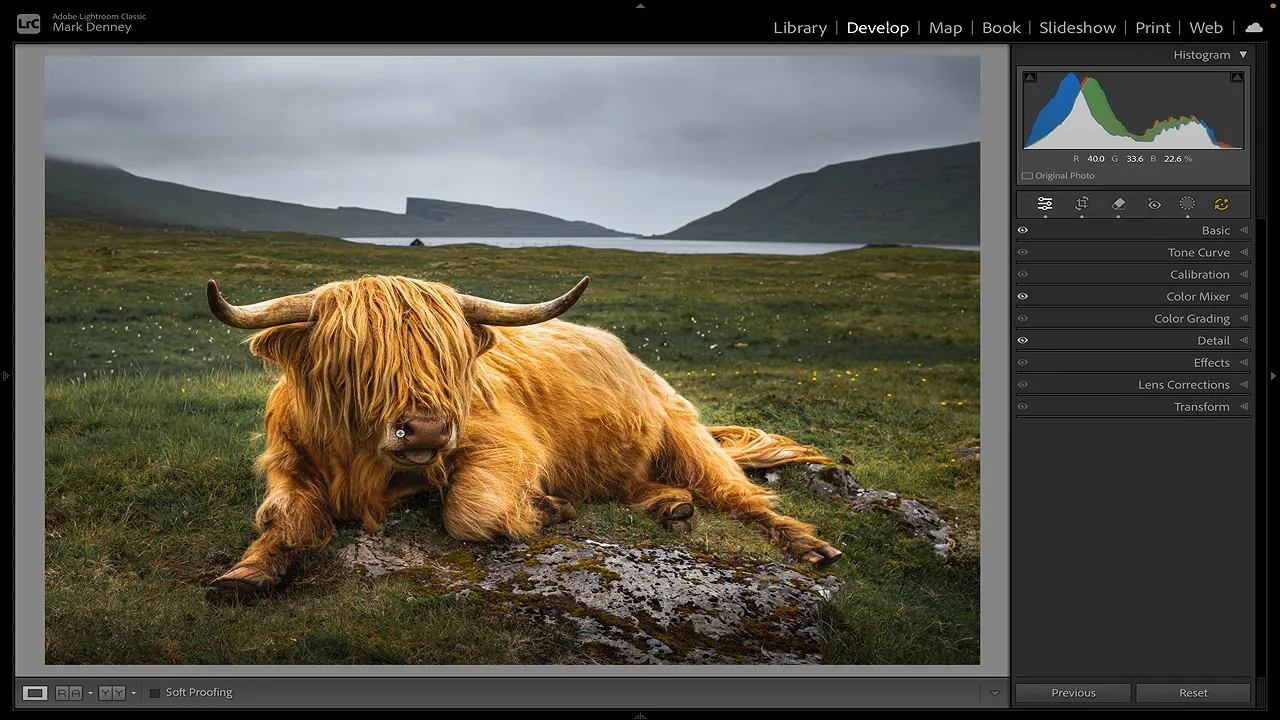
When I opened the image on my computer, the first thing I did was zoom in on the cow’s nose. Then I started looking around the rest of the photograph. The detail genuinely surprised me.
I think I had subconsciously connected the camera’s smaller size with lower expectations for its files. Compared with my larger professional camera, I expected some noticeable compromise. Instead, I was looking at beautifully rendered texture and an impressive amount of detail.
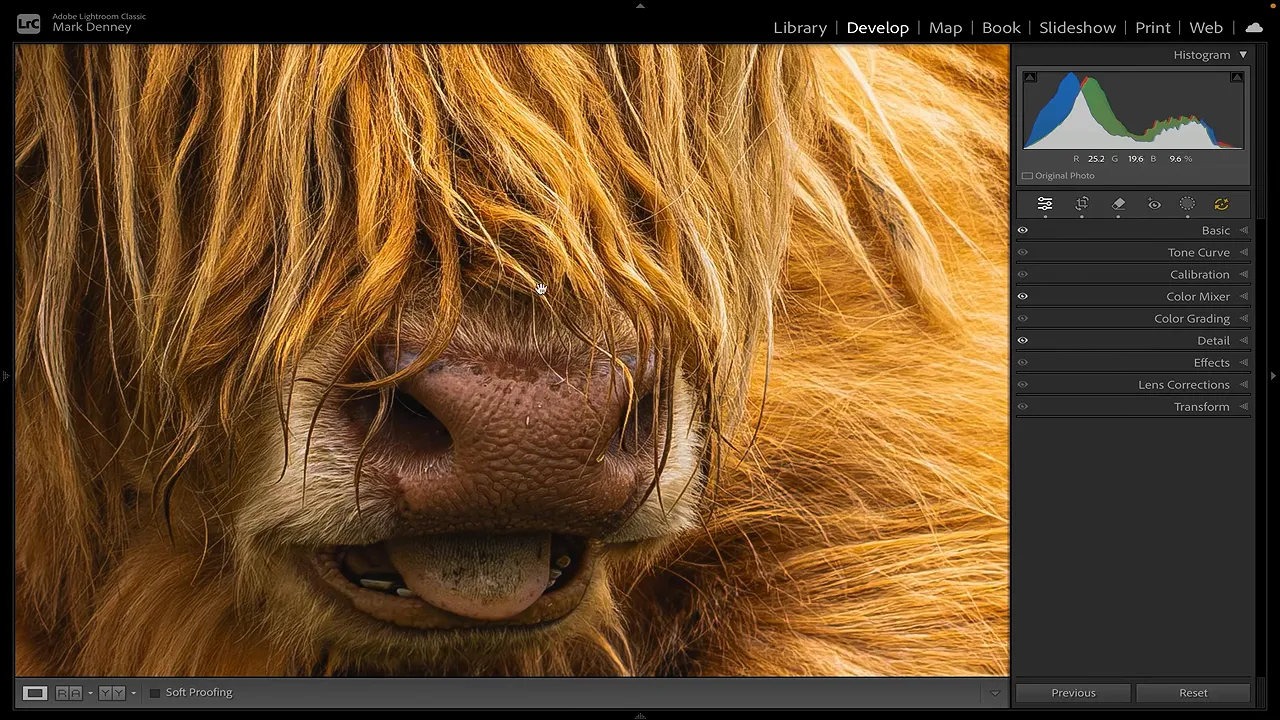
The X100VI produces roughly 40-megapixel images, while the Z8 produces roughly 45-megapixel images. Resolution alone doesn’t make the cameras equivalent, but it helped explain why there was so much detail to explore in that cow photograph.
This wasn’t simply a camera that was enjoyable to carry. It was producing files I could take seriously.
Editing the X100VI RAW Files Without Changing My Workflow
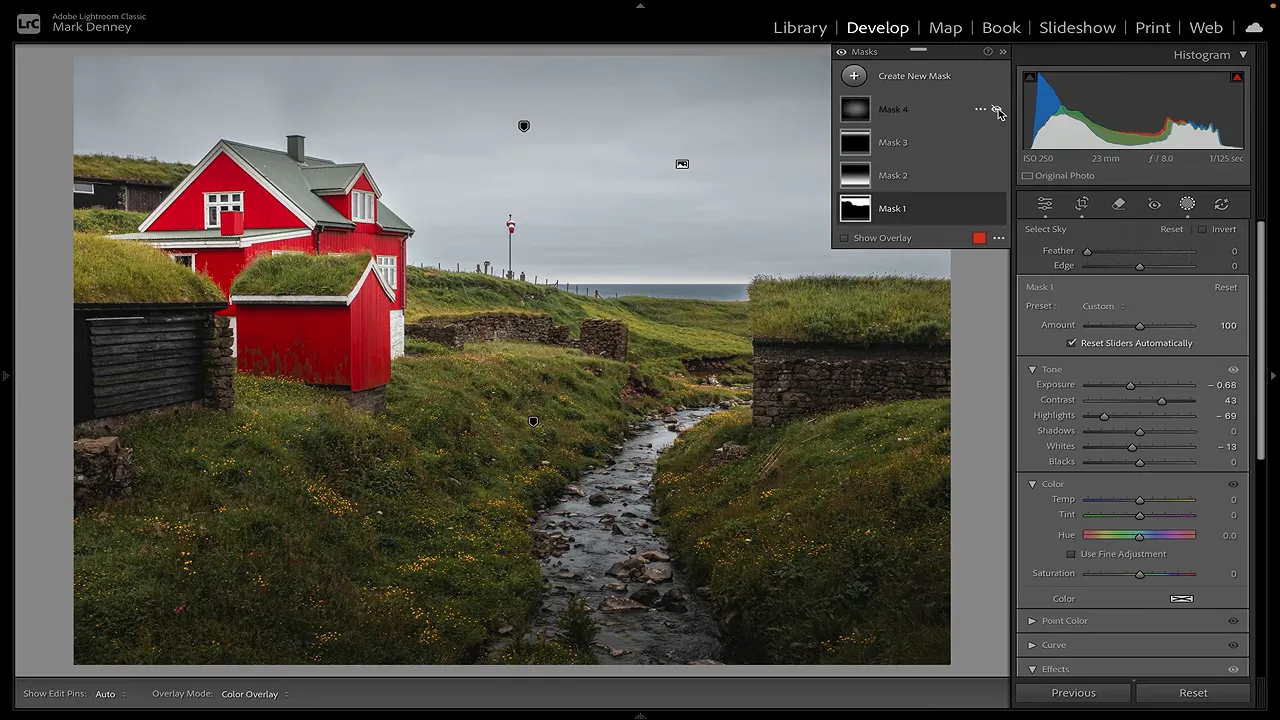
The next realization came while editing a photograph of red buildings beside a small stream. I worked through the image using the same Lightroom techniques I normally use for my Nikon photographs.
There wasn’t a special compact-camera workflow. I was just editing the photograph.
Using Masks to Shape the Composition
I made several local adjustments to guide attention through the scene:
- A sky mask: A subtle adjustment took some of the bite out of the sky.
- A foreground mask: Darkening the foreground helped keep it from competing with the rest of the composition.
- A linear gradient at the top: A darker upper edge created a visual lid over the scene.
- A broad central radial gradient: Brightening the center while leaving the edges darker created a vignette-like effect and an illusion of depth.
These are all techniques I regularly use. The combination of a brighter center and darker surroundings helps draw the eye into the photograph rather than allowing it to drift toward the edges. Adobe’s Lightroom Classic masking guide explains the selection and gradient tools used for these kinds of local adjustments.
Refining the Greens and Reds
I also worked in the Calibration panel, using the same color techniques I’ve used for years. I softened the overly green appearance of the grass and helped the red buildings stand out.
Somewhere during that process, it dawned on me that I had forgotten which camera made the photograph.
I had images from both cameras together in my Lightroom catalog. As I moved through them, I wasn’t treating the Fujifilm files as a separate category. I wasn’t holding back, changing my approach, or compensating for the camera.
I was editing toward the result I wanted, exactly as I would with a Nikon Z8 file.
Shadow Recovery Removed My Last Doubt
Another Faroe Islands landscape made that point even more clearly. The unedited RAW file showed a coastal village beneath steep hills, with a great deal of deep shadow across the foreground and buildings. There was some light and color in the sky, but the overall image felt subdued.
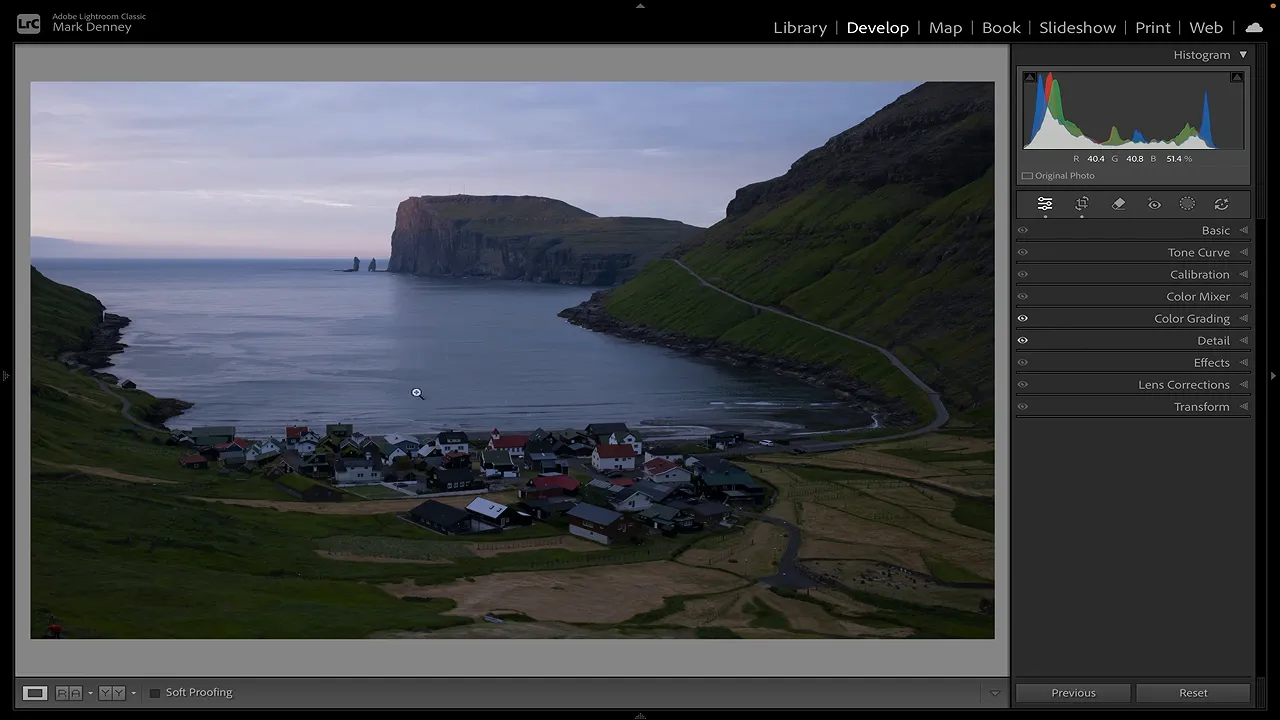
In the finished edit, I emphasized the light already coming through the scene and brought out the color in the sky. I lifted the shadows, refined the contrast, and developed the colors until the photograph had the presence I wanted.
The transformation was substantial, but what impressed me most was the clean shadow recovery. Looking into the village, I could bring out detail that had been buried in the darker original without the result falling apart for the edit I was making.
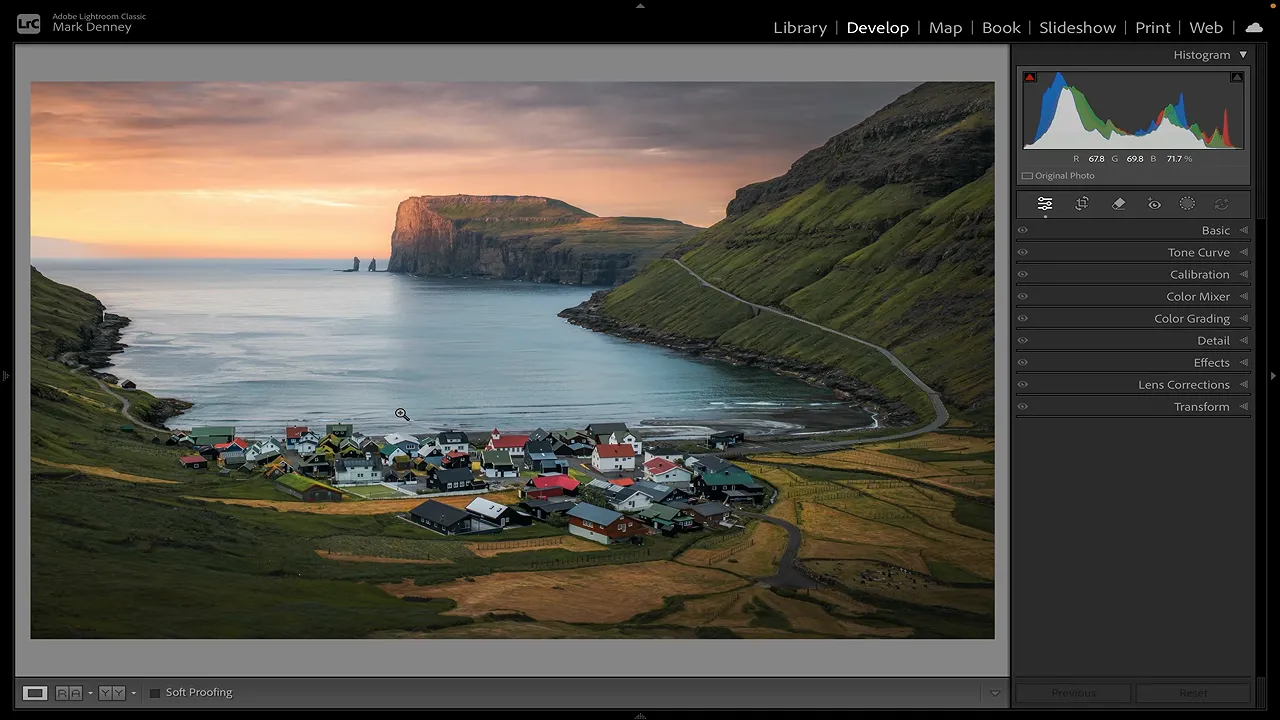
I had assumed that because the X100VI had physical limitations, particularly its fixed lens, it would also impose meaningful limitations on my editing. These files didn’t force that compromise.
I could recover shadows, control highlights, work with masks, and push color in the ways I normally would. For these photographs, I could push the files as far as I wanted to take them and get a result I was happy with.
That isn’t a claim that the X100VI and Z8 are technically identical. They have different limitations, and the Nikon remains the more flexible system. What mattered was that the smaller camera didn’t require me to lower my expectations for the finished photographs I was making.
The experience of carrying it gave me a reason to want it. Working with the files removed my last real reason not to keep it.
Its Value Is What It Adds, Not What It Replaces
The X100VI does not replace my Nikon Z8. Not even close. If I’m heading out specifically to photograph a landscape, especially when I expect to need different focal lengths, the Nikon is still coming with me.
But the Fujifilm was never really competing for that job.
It was competing with the moments when I wouldn’t have brought a camera at all.
That was what took me four years to understand. I kept trying to justify the camera by identifying what it could replace. Its real value came from what it added: more occasions when I wanted to carry a camera, more reasons to notice something, and photographs that otherwise wouldn’t exist.
This isn’t an argument that every photographer should buy an X100VI, or any new camera. The camera that fills this role might already be sitting in your closet. It could be an older camera, a compact camera, or simply something that makes photography feel different from your usual routine.
The useful questions are about behavior:
- Does it make you carry a camera more often?
- Does it encourage you to photograph things you would normally overlook?
- Does it lead to photographs that otherwise wouldn’t exist?
For me, the answer to all three was yes.
I don’t technically need this camera. It doesn’t replace my main system or fill a missing specification in my camera bag. But it makes me want to photograph more often, and when I do, the files give me what I need.
Maybe every photographer doesn’t need another camera. But I do think every photographer needs some way to make photographs without having to justify them first.
For me, that turned out to be the camera I didn’t need.


